
- NC01
- Persona
- 1939 - presente
Nury, nombre por el que es conocida Osmar Luis Calcagno y por el que actualmente también es llamada Omi, nació en la ciudad de Santa Fe el 12 de mayo de 1939, aunque fue inscripta oficialmente el 25 de mayo del mismo año. Creció junto a sus padres y un hermano mayor. Realizó allí sus estudios primarios y cursó el primer año de la escuela secundaria, que interrumpió al incorporarse tempranamente al mundo laboral.
Desde la infancia manifestó interés por el teatro, el baile, el maquillaje, la vestimenta y la interpretación de personajes femeninos. Durante la adolescencia comenzó a vincularse con espacios artísticos y grupos de amistades con intereses compartidos, desarrollando una afinidad por el espectáculo y la música. En Santa Fe asistió a presentaciones de distintas figuras del teatro y de la canción popular, experiencias que acompañaron su acercamiento al mundo artístico.
El nombre artístico Nury surgió a partir de una invitación para participar en un espectáculo de varieté. Posteriormente comenzó a presentarse como transformista en el cabaret Julien de Santa Fe, donde cantaba y participaba en distintos números escénicos. Durante aproximadamente cinco o seis años combinó esta actividad con trabajos en una mueblería, una zapatería y otros comercios.
A los 17 años se trasladó a Buenos Aires en un tren de carga. Durante sus primeros años en la ciudad trabajó como mucamo y en una confitería del barrio de Chacarita. En ese período atravesó la persecución policial hacia las expresiones de género disidentes y fue detenida en reiteradas oportunidades mediante la aplicación de edictos policiales, entre ellos el denominado “2.º H”. Estas prácticas de control y criminalización continuaron durante su juventud y, con menor frecuencia, durante la última dictadura cívico-militar.
A los 25 años conoció a Hugo, oriundo de Córdoba, con quien construyó una relación de pareja de 48 años. Juntos residieron en Hurlingham y posteriormente en Berazategui, donde compartieron una vida familiar y afectiva. Con el tiempo, su madre aceptó la relación y estableció un vínculo cercano con ambos.
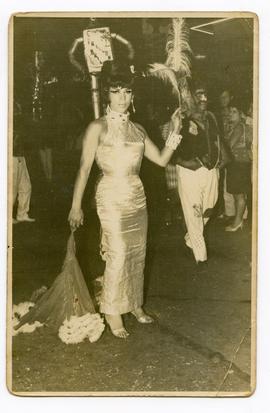
Los carnavales ocuparon un lugar central en su trayectoria artística y comunitaria. Desde los 20 años participó en comparsas de Tigre, Avellaneda y Berazategui, entre ellas Los Vacantes y Los Elegantes. Diseñaba y confeccionaba sus propios trajes con la colaboración de personas vinculadas al teatro. También desarrolló actividades relacionadas con el canto, el dibujo y la pintura, e integró un coro de la Coordinadora de Berazategui.
En los últimos años se acercó al Archivo de la Memoria Trans, donde aportó fotografías y documentos personales para la preservación de la memoria colectiva travesti y trans. Actualmente continúa compartiendo su trayectoria y sus archivos personales como parte de la construcción de memorias comunitarias y del reconocimiento de las experiencias de las generaciones que la precedieron.
Nury, the name by which Osmar Luis Calcagno is known and which she is also currently called Omi, was born in the city of Santa Fe on May 12, 1939, although she was officially registered on May 25 of the same year. She grew up there with her parents and an older brother. She completed her primary education and attended the first year of secondary school, which she left when she entered the workforce at an early age.
From childhood, she was drawn to theater, dancing, makeup, clothing, and performing female characters. During her adolescence, she began becoming involved in artistic spaces and social groups with shared interests, while developing a strong affinity for entertainment and music. In Santa Fe, she attended performances by various figures from theater and popular music, experiences that accompanied her growing involvement in the arts.
The stage name Nury emerged from an invitation to participate in a variety show. She later began performing as a transformista at the Julien cabaret in Santa Fe, where she sang and took part in stage performances. For approximately five or six years, she combined this activity with various commercial jobs, including work at a furniture store, a shoe store, and other businesses.
At the age of 17, she moved to Buenos Aires by freight train. During her first years in the city, she worked as a domestic servant and at a confectionery in the Chacarita neighborhood. During this period, she experienced police persecution directed at gender-nonconforming expressions and was arrested repeatedly under the enforcement of police edicts, including the one known as “2.º H.” These practices of surveillance and criminalization continued throughout her youth and, less frequently, during Argentina’s last civic-military dictatorship.
At the age of 25, she met Hugo, who was from Córdoba, and they built a 48-year relationship. They lived together in Hurlingham and later in Berazategui, where they shared a family and affective life. Over time, her mother accepted their relationship and developed a close bond with both of them.
Carnival became a central space in her artistic and community life. From the age of 20, she participated in comparsas in Tigre, Avellaneda, and Berazategui, including Los Vacantes and Los Elegantes. She designed and made her own costumes with the assistance of people connected to the theater. She also pursued activities related to singing, drawing, and painting, and was a member of a choir organized by the Coordinadora de Berazategui.
In recent years, she became involved with the Archivo de la Memoria Trans, where she contributed photographs and personal documents to the preservation of collective travesti and trans memory. She currently continues to share her life story and personal archives as part of the construction of community memory and the recognition of the experiences of the generations that came before her.