
- CMI01
- Persoon
- 1958 - Actualidad
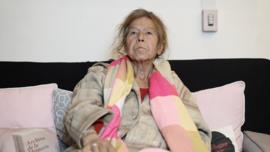
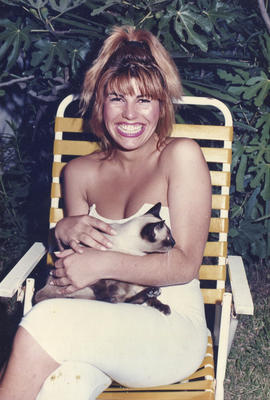
Carmen nació el 12 de abril de 1958 en el barrio de Nueva Pompeya, en la Ciudad Autónoma de Buenos Aires. A los dos años de edad se trasladó junto a su familia a la ciudad de Paraná, en la provincia de Santa Fe, en el marco de la actividad laboral de su padre en el sector aeronáutico. Transcurrió allí su infancia y parte de su adolescencia.
En 1978, a los 20 años, se instaló en la ciudad de Rosario, donde residió en la pensión “Real”, ubicada en la calle Tucumán 1294, hasta el año 1986. Durante este período comenzó a desarrollar espacios de sociabilidad y participación cultural vinculados a la comunidad travesti y trans. En marzo de 1982 fundó el club de fans de Susana Giménez en Rosario, generando un ámbito de encuentro y organización en un contexto atravesado por restricciones a la expresión de género y la vida comunitaria.
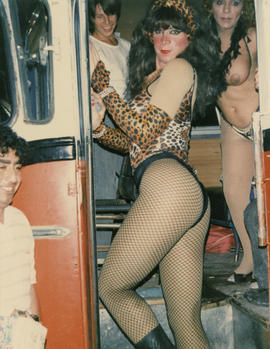
Entre 1984 y 1986 realizó viajes laborales a Río de Janeiro, Brasil, donde trabajó durante períodos de aproximadamente cuatro meses en la Galería Alaska, participando en espectáculos y shows. Estas experiencias formaron parte de los circuitos laborales que muchas personas travestis y trans construyeron en el exterior ante las limitaciones y la persecución existentes en Argentina.
En 1986 emprendió una gira por distintas ciudades del sur argentino, entre ellas Río Grande, Río Gallegos, Comodoro Rivadavia y Bahía Blanca, donde se presentó en cabarets junto a Gina Vivanco, con quien sostuvo un vínculo cercano y a quien consideraba una “hermana de la vida”. Ese mismo año regresó a la provincia de Buenos Aires y residió junto a ella en Florencio Varela.
Entre 1987 y 1995 gestionó el almacén y fiambrería “La Farándula” en el barrio de Villa Urquiza, en la Ciudad de Buenos Aires, desarrollando una actividad comercial propia. En 1988 viajó a París, Francia, motivada por Gina Vivanco, y posteriormente regresó al país para continuar con su emprendimiento.
En 2001 participó en la Iglesia de la Comunidad Metropolitana (ICM), donde colaboró en la organización de actividades sociales, fiestas y espectáculos, en articulación con espacios de diversidad sexual y de fe.
Entre 2002 y 2004 formó parte de la reestructuración de la Asociación de Travestis, Transexuales y Transgéneros de Argentina (ATTTA), desempeñándose como tesorera. Su participación se inscribe en los procesos de organización colectiva que impulsaron la visibilización y la ampliación de derechos para la población travesti y trans en el país.
Desde 2017 y hasta 2022 integró el Archivo de la Memoria Trans, contribuyendo a la construcción y preservación de la memoria colectiva de la comunidad. Actualmente, su trayectoria se reconoce en estos espacios de participación y en los vínculos comunitarios que sostuvo a lo largo de su vida.
Carmen was born on April 12, 1958, in the Nueva Pompeya neighborhood of the Autonomous City of Buenos Aires. At the age of two, she moved with her family to the city of Paraná, in Santa Fe Province, due to her father’s work in the aeronautical sector. She spent her childhood and part of her adolescence there.
In 1978, at the age of 20, Carmen moved to Rosario, where she lived at the “Real” boarding house, located at 1294 Tucumán Street, until 1986. During this period, she began developing spaces for social interaction and cultural participation connected to the travesti and trans community. In March 1982, she founded the Susana Giménez Fan Club in Rosario, creating a space for gathering and community organizing in a context marked by restrictions on gender expression and community life.
Between 1984 and 1986, Carmen made several work trips to Rio de Janeiro, Brazil, where she worked for approximately four months at a time at Galeria Alaska, taking part in shows and performances. These experiences were part of the international work circuits that many travesti and trans people developed in response to the limitations and persecution they faced in Argentina.
In 1986, she embarked on a tour of several cities in southern Argentina, including Río Grande, Río Gallegos, Comodoro Rivadavia, and Bahía Blanca, where she performed in cabarets alongside Gina Vivanco, with whom she shared a close bond and whom she considered a “sister for life.” That same year, she returned to Buenos Aires Province and lived with Gina in Florencio Varela.
Between 1987 and 1995, Carmen managed “La Farándula,” a grocery and delicatessen shop in the Villa Urquiza neighborhood of Buenos Aires, developing her own independent business. In 1988, encouraged by Gina Vivanco, she traveled to Paris, France, and later returned to Argentina to continue running her business.
In 2001, Carmen became involved with the Metropolitan Community Church (ICM), where she helped organize social activities, parties, and performances in collaboration with LGBTQ+ and faith-based community spaces.
Between 2002 and 2004, she participated in the restructuring of the Argentine Association of Travestis, Transsexuals, and Transgender People (ATTTA), serving as treasurer. Her involvement was part of broader processes of collective organizing that sought to increase the visibility of and expand rights for the travesti and trans population in Argentina.
From 2017 to 2022, Carmen was a member of the Trans Memory Archive, contributing to the construction and preservation of the community’s collective memory. Today, her trajectory continues to be reflected in these spaces of participation and in the community bonds she has sustained throughout her life.