
Identity area
Type of entity
Corporate body
Authorized form of name
Hotel Gondolín
Parallel form(s) of name
- El Gondo
Standardized form(s) of name according to other rules
Other form(s) of name
Identifiers for corporate bodies
Description area
Dates of existence
2003 - presente
History
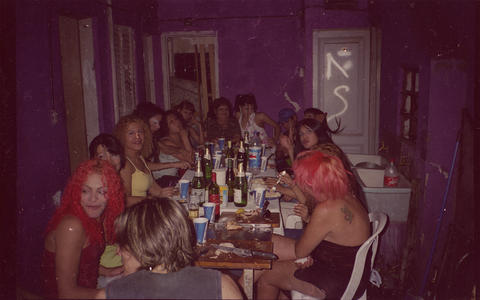
El Hotel Gondolín, también conocido como “El Gondo”, es un espacio cooperativo, autogestionado y comunitario habitado históricamente por travestis y feminidades trans de distintas procedencias. Ubicado en el barrio de Villa Crespo, en la Ciudad de Buenos Aires, el hotel constituye un espacio significativo para la memoria colectiva travesti-trans y para la reconstrucción de las estrategias comunitarias desarrolladas frente a situaciones de exclusión social, familiar, laboral y habitacional.
Desde 1987, el establecimiento funcionaba como un hotel destinado, entre otras personas, a trabajadoras sexuales travestis y trans. Las condiciones de alojamiento y los costos elevados derivaron en un proceso de organización entre quienes lo habitaban. Luego de una clausura administrativa, las residentes decidieron permanecer en el lugar y asumir colectivamente su sostenimiento, incluyendo el pago de impuestos y deudas. Este proceso dio lugar a una experiencia de apropiación y autogestión comunitaria que convirtió al espacio en un lugar de residencia, contención y construcción colectiva.
En 2003 se constituyó la Asociación Civil Gondolín, mediante la cual sus integrantes formalizaron una estructura de organización para la administración del hotel y el desarrollo de distintas actividades. Además de brindar alojamiento, el espacio se consolidó como ámbito de encuentro, formación y organización travesti-trans.
El Gondolín recibió especialmente a personas provenientes de distintas provincias del país que migraban hacia Buenos Aires como consecuencia de situaciones de persecución, expulsión familiar, discriminación o falta de oportunidades, así como en búsqueda de mejores condiciones de vida. En este contexto, el espacio funcionó como una red comunitaria que posibilitó el acceso a alojamiento y acompañamiento, y favoreció procesos vinculados con la educación, la salud y la capacitación.
La dimensión formativa y laboral también constituye una parte importante de su trayectoria. En el hotel se desarrollaron talleres vinculados con el diseño y la confección de indumentaria y otras actividades de capacitación. Asimismo, el espacio estuvo relacionado con la Cooperativa Empoderamiento Travesti Trans, orientada a la organización laboral y productiva de personas travestis y trans.
La historia del Hotel Gondolín forma parte de los procesos de organización colectiva mediante los cuales las comunidades travestis y trans construyeron redes de cuidado, vivienda, trabajo y pertenencia frente a contextos de exclusión. Su recorrido ha sido registrado también mediante producciones culturales, entre ellas el documental Hotel Gondolín, estrenado en 2005, y el libro fotográfico Hotel Gondolín, publicado en 2015.
Como espacio comunitario y de organización, el Gondolín constituye un sitio relevante para la memoria travesti-trans en Argentina, tanto por su experiencia de autogestión habitacional como por las redes afectivas, laborales, formativas y políticas construidas a lo largo de su historia.
Hotel Gondolín, also known as “El Gondo,” is a cooperative, self-managed community space that has historically been home to travesti and transgender women from diverse backgrounds. Located in the Villa Crespo neighborhood of Buenos Aires, the hotel is a significant site for collective travesti-trans memory and for documenting the community-based strategies developed in response to social, family, employment, and housing exclusion.
Since 1987, the establishment had operated as a hotel that accommodated, among others, travesti and transgender sex workers. The cost of lodging and the conditions of residence led to a process of collective organizing among its residents. Following an administrative closure, the residents decided to remain in the building and collectively assume responsibility for its upkeep, including the payment of taxes and outstanding debts. This process gave rise to an experience of community ownership and self-management that transformed the space into a place of residence, mutual support, and collective organizing.
In 2003, the Gondolín Civil Association was established, providing its members with a formal organizational structure for managing the hotel and developing a range of activities. In addition to providing housing, the space became an important site for gathering, education, and travesti-trans organizing.
El Gondolín has been home particularly to people from different provinces across Argentina who migrated to Buenos Aires as a result of persecution, family rejection, discrimination, or limited opportunities, as well as in search of improved living conditions. In this context, the space functioned as a community network that provided housing and mutual support while facilitating access to education, healthcare, and vocational training.
Education and employment initiatives have also been an important part of its history. The hotel hosted workshops focused on clothing design and production, as well as other training activities. The space was also connected to the Cooperativa Empoderamiento Travesti Trans, an initiative focused on organizing travesti and transgender people around employment and productive activities.
The history of Hotel Gondolín forms part of the broader processes of collective organizing through which travesti and transgender communities built networks of care, housing, employment, and belonging in response to conditions of exclusion. Its history has also been documented through cultural productions, including the documentary Hotel Gondolín, released in 2005, and the photographic book Hotel Gondolín, published in 2015.
As a community and organizing space, El Gondolín remains an important site of travesti-trans memory in Argentina, both because of its experience of collective housing self-management and because of the affective, employment, educational, and political networks that have been built there throughout its history.
Places
Villa Crespo
Ciudad Autónoma de Buenos Aires
Legal status
Functions, occupations and activities
Mandates/sources of authority
Internal structures/genealogy
General context
Relationships area
Access points area
Subject access points
Place access points
Occupations
Control area
Authority record identifier
Maintained by
Institution identifier
AR-AMT
Rules and/or conventions used
Status
Revised
Level of detail
Partial
Dates of creation, revision and deletion
20/08/2026
10/09/2026
Language(s)
- Latin American Spanish
- English
Script(s)
Sources
Maintenance notes
BH
Digital object metadata
Access
Filename
Gondolin.jpg
Latitude
Longitude
Media type
Image
Mime-type
image/jpeg