

Identificatie
referentie code
Titel
Datum(s)
- 1966 - 2000 (Vervaardig)
Beschrijvingsniveau
Archief
Omvang en medium
91 Fotografías en soporte papel.
Context
Naam van de archiefvormer
Biografie
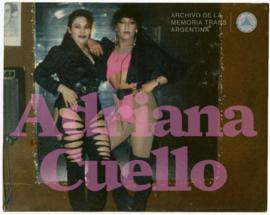
Adriana Cuello nació el 10 de Mayo de 1966 Famaillá, Tucumán.
Hija de una familia de 8 hermanes.
A los 11 años, en plena dictadura, se enteró que la casa donde vivía con su mamá estaba hipotecada y no tenían plata para pagarla.
Movilizada por esta necesidad económica comenzó a ejercer el trabajo sexual, con su amiga Marcela. Se fué de Tucuman a los 14 años y no volvió más. Pasó por Buenos Aires un tiempo y debido a la represión policial empozó a estudiar baile y recorrer todos los cabarets del sur del país.
Sufrió abuso de poder. Vivió muchos momentos presa y golpeada debido a los edictos policiales de la época en varias provincias.
A su amiga Marcela la asesinó la Policía en la ruta 38. Después de esta muerte migró a Buenos Aires y trabajó en la Panamericana.
Una noche, a los 17 años, mientras trabajaba como prostituta en la Autopista Panamericana les dijo a sus compañeras que se iría a donde la lleve el próximo camión que pase. El primer camión que paró se dirigía hacia Neuquén y desde entonces vive allí. En Neuquén conoció a Carolina A. Figueredo, Daniela Chavez, “La Cheli”, “La Heidi”, Katty Villagra, Jessica Sandoval, “La Negrita”, “La cocó”, Soledad Freire, Gabriela Retamal “La Tortuguita”, Marité, Laura Chandía, “La Brandy”, “La Pinky (cordobesa)”, y más.
Por problemas con proxenetas, tuvo que irse temporalmente de Neuquén, a sus 20 años. Entonces recorrió el sur de Argentina.
En 1993 volvió a Neuquén y a hoy día vive en Costa Limay: el primer complejo habitacional para personas trans del mundo creado e impulsado por Mónica Astorga, con su pareja y su perro.
Fue tía de Gala Estefanía Perea, víctima de travesticidio a los 19 años.
Adriana Cuello was born on May 10, 1966, in Famaillá, Tucumán.
She was one of eight siblings.
At age 11, during the dictatorship, she learned that the house where she lived with her mother was mortgaged and they didn't have the money to pay it off. Driven by this financial need, she began working as a sex worker with her friend Marcela.
She left Tucumán at age 14 and never returned. She suffered abuse of power and was imprisoned and beaten many times due to the police edicts of the time in several provinces.
Her friend Marcela was murdered by the police on Route 38. After Marcela's death, she migrated to Buenos Aires and worked on the Panamericana Highway.
One night, at 17, while working as a prostitute on the Panamericana Highway, she told her colleagues she would go wherever the next passing truck took her. The first truck that stopped was headed to Neuquén, and she has lived there ever since. In Neuquén, she met Carolina A. Figueredo, Daniela Chavez, “La Cheli,” “La Heidi,” Katty Villagra, Jessica Sandoval, “La Negrita,” “La Cocó,” Soledad Freire, Gabriela Retamal “La Tortuguita,” Marité, Laura Chandía, “La Brandy,” “La Pinky (from Córdoba),” and others.
Due to problems with pimps, she had to leave Neuquén temporarily at age 20. She spent some time in Buenos Aires, and due to police repression, she began studying dance and performing in cabarets throughout southern Argentina. In 1993, she returned to Neuquén and today lives with her partner and their dog in Costa Limay : the world's first housing complex for transgender people, created and promoted by Mónica Astorga,
She was the aunt of Gala Estefanía Perea, a victim of transvesticide at the age of 19.
archiefbewaarplaats
Geschiedenis van het archief
Directe bron van verwerving of overbrenging
Donación.
Inhoud en structuur
Bereik en inhoud
El fondo se compone por dos secciones: personal y laboral, la segunda de mayor volumen. Dentro de la serie personal es posible encontrar en su mayoría retratos. Por otra parte, dentro de la serie laboral, nos encontramos con fotografías de su trabajo realizando shows en cabarets.
Waardering, vernietiging en slectie
Aanvullingen
Ordeningstelsel
La documentación se encuentra dividida en las siguientes secciones y series funcionales:
Fondo Adriana Cuello
- Sección Personal
1.1 Serie Correspondencia
1.2 Serie Fiestas y Cumpleaños
1.3 Serie Retratos
1.4 Serie Viajes - Sección Laboral
2.1 Serie Shows en Cabarets
Voorwaarden voor toegang en gebruik
Voorwaarden voor raadpleging
El fondo es de acceso público. En todos los casos, el acceso se da a su copia digital y no a los originales. Siempre que se utilicen los documentos del Archivo de la Memoria Trans, deberá ser citada la procedencia.
Voorwaarden voor reproductie
Se puede obtener copia digital de los documentos, solicitándola a archivotrans@gmail.com donde se especificará el tipo de consulta.
Taal van het materiaal
- Spaans
Schrift van het materiaal
Taal en schrift aantekeningen
Fysieke eigenschappen en technische eisen
Se puede acceder a la documentación en formato digital.
Toegangen
Cuadro de Clasificación
Inventario
Verwante materialen
Bestaan en verblifplaats van originelen
Los originales se encuentran custodiados en la reserva del Archivo de la Memoria Trans.
Bestaan en verblijfplaats van kopieën
El archivo cuenta con copias digitales de la documentación para dar acceso al público.
Related units of description
Aantekeningen
Alternative identifier(s)
Trefwoorden
Onderwerp trefwoord
Geografische trefwoorden
Naam ontsluitingsterm
Genre access points
Beschrijvingsbeheer
Identificatie van de beschrijving
Identificatiecode van de instelling
Toegepaste regels en/of conventies
Directriz para la implementación de la Norma ISAD-G, Versión diciembre 2021. Buenos Aires: AGN, 2021.
Status
Concept
Niveau van detaillering
Geheel
Verwijdering van datering archiefvorming
Descripción creada: 2025
Taal (talen)
- Spaans
Schrift(en)
Bronnen
Aantekeningen van de archivaris
SBH
CN
Digitaal object metadata
Bestandsnaam
ATOM_Adriana_Cuello.pdf
Latitude
Longitude
mediatype
Tekst
Mime-type
application/pdf