
Affichage de 3 résultats

Notice d'autorité
Rosario

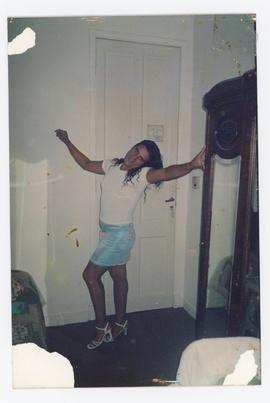
Mychel Michella Aguilera

  • MMA01
  • Personne
  • 1969 - presente

Mychel Michella nació el 10 de enero de 1969 en la ciudad de Rosario, provincia de Santa Fe. Es hija de Sara Ilaria Aguilera y Elías Francisco Pérez y creció junto a diez hermanos, uno de ellos fallecido. Su infancia transcurrió en un contexto familiar atravesado por el maltrato y en una época en la que las posibilidades de reconocerse como mujer trans estaban fuertemente condicionadas por la discriminación social. Desde temprana edad comenzó a construir su identidad de manera gradual y con temor a que su familia conociera sus experiencias y deseos.

A los 6 años comenzó a alejarse reiteradamente de su casa. Durante esos períodos vivió en la calle, en paradas de colectivos, y se alimentó con la ayuda de otras personas. La Policía de Menores la trasladaba frecuentemente a su domicilio y, en tres oportunidades, fue derivada a hogares de niños. A los 12 años inició su transición fuera de su hogar y dejó distintas escuelas debido a los conflictos derivados de su identidad de género y de su decisión de defender sus derechos.

A los 13 años comenzó a realizar trabajo sexual en el Parque Independencia de Rosario, actividad que constituyó durante años su principal fuente de ingresos. Durante su adolescencia fue detenida junto a otras compañeras; al ser menor de edad, en general la Policía convocaba a sus padres para retirarla, aunque en algunas ocasiones fue trasladada a dependencias de la Policía de Menores. Luego de alcanzar la mayoría de edad, las detenciones estuvieron acompañadas por distintas formas de violencia física y psicológica ejercidas por las fuerzas policiales. El trabajo sexual también le permitió contribuir económicamente con su familia, que atravesaba una situación de pobreza. A los 16 años comenzó a tomar hormonas.

Paralelamente desarrolló otros trabajos, entre ellos tareas de repostería, talleres manuales, cuidado de personas mayores, empleo doméstico y trabajo en un frigorífico de Pérez Millán, provincia de Buenos Aires. En 1993 comenzó su participación política en el peronismo de Rosario, vinculándose con una Unidad Básica y participando en comedores y actividades comunitarias, entre ellas la organización de festejos por el Día de la Niñez.

A los 30 años conoció a Dante, con quien convivió durante diez años. Posteriormente se separaron. Desde joven también se vinculó con la religión afrobrasileña a través de amigas y, desde 2018, es Pronta en Santos en las tres líneas: Exú, Caboclo y Nación.

Alrededor de 2014 comenzó a participar en espacios vinculados a los derechos de las mujeres trans. Actualmente integra la Mesa de Reparación Histórica y el grupo Autoconvocadas de Rosario. Desde 2024 trabaja en el Archivo de la Memoria Trans, donde desarrolla tareas en las áreas de digitalización y conservación.

Mychel Michella was born on January 10, 1969, in the city of Rosario, Santa Fe Province. She is the daughter of Sara Ilaria Aguilera and Elías Francisco Pérez and grew up with ten siblings, one of whom has since passed away. Her childhood unfolded in a family environment marked by mistreatment and during a period when the possibility of identifying as a trans woman was heavily constrained by social discrimination. From an early age, she began to develop her gender identity gradually, fearful that her family would learn about her experiences and desires.

At the age of six, she began repeatedly leaving home. During these periods, she lived on the streets, often at bus stops, and relied on food given to her by others. The Juvenile Police frequently returned her to her family home, and on three occasions she was placed in children’s homes. At the age of 12, she began her transition outside her family home and left several schools because of conflicts arising from her gender identity and her decision to defend her rights.

At 13, she began doing sex work in Parque Independencia in Rosario, an activity that became her main source of income for many years. During her adolescence, she was arrested together with other companions; because she was a minor, the police would generally contact her parents to pick her up, although on some occasions she was taken to Juvenile Police facilities. After reaching adulthood, these arrests were accompanied by various forms of physical and psychological violence perpetrated by police forces. Sex work also enabled her to contribute financially to her family, which was living in poverty. At 16, she began taking hormones.

Alongside sex work, she held various other jobs, including pastry-making, handicraft workshops, elder care, domestic work, and employment at a slaughterhouse in Pérez Millán, Buenos Aires Province. In 1993, she became politically active in the Peronist movement in Rosario, becoming involved with a local Unidad Básica and participating in community activities, including soup kitchens and organizing celebrations for Children’s Day.

At the age of 30, she met Dante, with whom she lived for ten years. They later separated. From a young age, she was also introduced to Afro-Brazilian religion through friends and, since 2018, has been Pronta en Santos in its three lines: Exú, Caboclo, and Nación.

Around 2014, she began participating in spaces focused on the rights of trans women. She currently takes part in the Mesa de Reparación Histórica and the Autoconvocadas group in Rosario. Since 2024, she has worked at the Archivo de la Memoria Trans, where she carries out tasks in digitization and preservation.
Carmen Marcial Ibarra

  • CMI01
  • Personne
  • 1958 - Actualidad

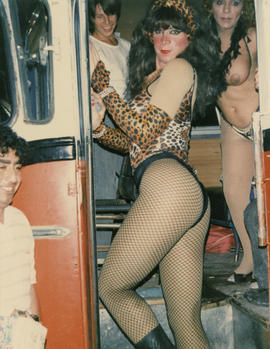
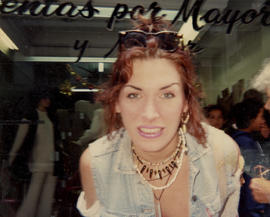
Carmen nació el 12 de abril de 1958 en el barrio de Nueva Pompeya, en la Ciudad Autónoma de Buenos Aires. A los dos años de edad se trasladó junto a su familia a la ciudad de Paraná, en la provincia de Santa Fe, en el marco de la actividad laboral de su padre en el sector aeronáutico. Transcurrió allí su infancia y parte de su adolescencia.

En 1978, a los 20 años, se instaló en la ciudad de Rosario, donde residió en la pensión “Real”, ubicada en la calle Tucumán 1294, hasta el año 1986. Durante este período comenzó a desarrollar espacios de sociabilidad y participación cultural vinculados a la comunidad travesti y trans. En marzo de 1982 fundó el club de fans de Susana Giménez en Rosario, generando un ámbito de encuentro y organización en un contexto atravesado por restricciones a la expresión de género y la vida comunitaria.

Entre 1984 y 1986 realizó viajes laborales a Río de Janeiro, Brasil, donde trabajó durante períodos de aproximadamente cuatro meses en la Galería Alaska, participando en espectáculos y shows. Estas experiencias formaron parte de los circuitos laborales que muchas personas travestis y trans construyeron en el exterior ante las limitaciones y la persecución existentes en Argentina.

En 1986 emprendió una gira por distintas ciudades del sur argentino, entre ellas Río Grande, Río Gallegos, Comodoro Rivadavia y Bahía Blanca, donde se presentó en cabarets junto a Gina Vivanco, con quien sostuvo un vínculo cercano y a quien consideraba una “hermana de la vida”. Ese mismo año regresó a la provincia de Buenos Aires y residió junto a ella en Florencio Varela.

Entre 1987 y 1995 gestionó el almacén y fiambrería “La Farándula” en el barrio de Villa Urquiza, en la Ciudad de Buenos Aires, desarrollando una actividad comercial propia. En 1988 viajó a París, Francia, motivada por Gina Vivanco, y posteriormente regresó al país para continuar con su emprendimiento.
En 2001 participó en la Iglesia de la Comunidad Metropolitana (ICM), donde colaboró en la organización de actividades sociales, fiestas y espectáculos, en articulación con espacios de diversidad sexual y de fe.

Entre 2002 y 2004 formó parte de la reestructuración de la Asociación de Travestis, Transexuales y Transgéneros de Argentina (ATTTA), desempeñándose como tesorera. Su participación se inscribe en los procesos de organización colectiva que impulsaron la visibilización y la ampliación de derechos para la población travesti y trans en el país.
Desde 2017 y hasta 2022 integró el Archivo de la Memoria Trans, contribuyendo a la construcción y preservación de la memoria colectiva de la comunidad. Actualmente, su trayectoria se reconoce en estos espacios de participación y en los vínculos comunitarios que sostuvo a lo largo de su vida.

Carmen was born on April 12, 1958, in the Nueva Pompeya neighborhood of the Autonomous City of Buenos Aires. At the age of two, she moved with her family to the city of Paraná, in Santa Fe Province, due to her father’s work in the aeronautical sector. She spent her childhood and part of her adolescence there.

In 1978, at the age of 20, Carmen moved to Rosario, where she lived at the “Real” boarding house, located at 1294 Tucumán Street, until 1986. During this period, she began developing spaces for social interaction and cultural participation connected to the travesti and trans community. In March 1982, she founded the Susana Giménez Fan Club in Rosario, creating a space for gathering and community organizing in a context marked by restrictions on gender expression and community life.

Between 1984 and 1986, Carmen made several work trips to Rio de Janeiro, Brazil, where she worked for approximately four months at a time at Galeria Alaska, taking part in shows and performances. These experiences were part of the international work circuits that many travesti and trans people developed in response to the limitations and persecution they faced in Argentina.

In 1986, she embarked on a tour of several cities in southern Argentina, including Río Grande, Río Gallegos, Comodoro Rivadavia, and Bahía Blanca, where she performed in cabarets alongside Gina Vivanco, with whom she shared a close bond and whom she considered a “sister for life.” That same year, she returned to Buenos Aires Province and lived with Gina in Florencio Varela.

Between 1987 and 1995, Carmen managed “La Farándula,” a grocery and delicatessen shop in the Villa Urquiza neighborhood of Buenos Aires, developing her own independent business. In 1988, encouraged by Gina Vivanco, she traveled to Paris, France, and later returned to Argentina to continue running her business.

In 2001, Carmen became involved with the Metropolitan Community Church (ICM), where she helped organize social activities, parties, and performances in collaboration with LGBTQ+ and faith-based community spaces.

Between 2002 and 2004, she participated in the restructuring of the Argentine Association of Travestis, Transsexuals, and Transgender People (ATTTA), serving as treasurer. Her involvement was part of broader processes of collective organizing that sought to increase the visibility of and expand rights for the travesti and trans population in Argentina.

From 2017 to 2022, Carmen was a member of the Trans Memory Archive, contributing to the construction and preservation of the community’s collective memory. Today, her trajectory continues to be reflected in these spaces of participation and in the community bonds she has sustained throughout her life.

Fátima Rodriguez Lara

  • FR01
  • Personne
  • 1973 - presente

Nació el 25 de abril de 1973 en la ciudad de Buenos Aires, en el barrio de Once. Realizó sus estudios primarios en la Escuela Provincia de Catamarca, en la Ciudad de Buenos Aires. Vivió junto a su familia hasta los 17 años, momento en que se trasladó a la ciudad de Rosario para continuar su proceso de transición. En ese contexto, realizó una intervención quirúrgica utilizando documentación falsa.

Su transición fue paulatina, en continuidad con una expresión de género que desde temprana edad se caracterizó por su feminidad. Durante su juventud contó con el acompañamiento de dos referentes y amigas trans, La Negra Judith y Daniela Romero del Abasto, quienes ocuparon un lugar significativo en su trayectoria y en la construcción de redes afectivas y comunitarias.

En su juventud comenzó a ejercer el trabajo sexual en el boliche Confusión y posteriormente en la vía pública, en la zona de Palermo, junto a otras mujeres trans. Esta etapa forma parte de las experiencias compartidas por un grupo de mujeres que desarrollaron sus trayectorias en espacios atravesados por la exclusión y la persecución hacia las identidades travestis y trans. Actualmente integra el grupo de las chicas sobrevivientes del boliche Confusión, espacio de memoria y pertenencia construido a partir de esas experiencias comunes.

Con el transcurso de los años, desarrolló una trayectoria laboral vinculada al ámbito de la salud. Actualmente vive en la ciudad de Rosario y se desempeña como enfermera en el Centro de Salud 7 de Abril de la Universidad Nacional de Rosario. También dirige un Centro de Noche y Casa de Refugio para Mujeres Trans, destinado al acompañamiento y protección de mujeres trans en situación de vulnerabilidad. La institución forma parte de la red de protección provincial de Santa Fe.

Su recorrido reúne experiencias de construcción de identidad, redes de cuidado y afectividad entre mujeres trans, trabajo sexual y posterior inserción laboral en el ámbito de la salud. Su participación en el grupo de sobrevivientes de Confusión y su actual tarea al frente de un espacio de refugio y protección para mujeres trans vinculan su trayectoria personal con procesos de memoria, acompañamiento comunitario y acceso a derechos.

She was born on April 25, 1973, in the city of Buenos Aires, in the Once neighborhood. She attended Provincia de Catamarca Primary School in the City of Buenos Aires. She lived with her family until the age of 17, when she moved to the city of Rosario to continue her transition. During this period, she underwent a surgical procedure using false identification documents.

Her transition was gradual, in continuity with a gender expression that had been distinctly feminine from an early age. During her youth, she was supported by two close friends and trans mothers, La Negra Judith and Daniela Romero del Abasto, who played a significant role in her life and in the development of her affective and community networks.

As a young woman, she began doing sex work at the Confusión nightclub and later on the streets in the Palermo neighborhood, together with other trans women. This period forms part of the shared experiences of a group of women whose lives unfolded in spaces shaped by exclusion and persecution of travesti and trans identities. She is currently a member of the group of survivors of the Confusión nightclub, a space of memory and belonging built around these shared experiences.

Over the years, she developed a professional career in healthcare. She currently lives in Rosario and works as a nurse at the Centro de Salud 7 de Abril of the National University of Rosario. She also directs a Night Center and Shelter for Trans Women, providing support and protection to trans women experiencing vulnerable circumstances. The shelter is part of the provincial protection network of Santa Fe.

Her life trajectory encompasses experiences of gender identity formation, affective and care networks among trans women, sex work, and subsequent employment in the healthcare sector. Her participation in the group of Confusión survivors, together with her current work leading a shelter and protection space for trans women, connects her personal trajectory with broader processes of memory, community support, and access to rights.