
Mostrando 4 resultados

Registro de autoridad
Berazategui

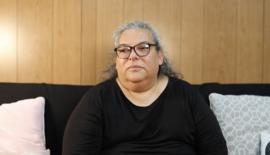
Gabriela Alejandra Rodríguez "La Juanjo"

  • GR01
  • Persona
  • 1968 - presente

Gabriela A. Rodríguez nació en 1968 y pasó su primera infancia en Susana, provincia de Santa Fe. Desde temprana edad manifestó una identidad femenina, encontrando acompañamiento y comprensión en personas cercanas, entre ellas la familia de su amigo Víctor y Vilma, a quien reconoce como una referente espiritual. Durante su adolescencia mantuvo su vínculo con la fe católica desde una experiencia personal, aunque a los 13 años decidió dejar de confesarse tras una situación negativa con un sacerdote.

Durante esos años residió en distintas localidades, entre ellas General Alvear, Tucumán y finalmente Ezpeleta/Berazategui, donde completó sus estudios secundarios. A los 15 años conoció a Marcela, una referente fundamental en su trayectoria, quien la acompañó en sus primeros pasos de construcción de su identidad femenina y le transmitió conocimientos vinculados al maquillaje, la vestimenta y las formas de expresión de género. En ese período comenzó a utilizar hormonas disponibles en la época y recibió el apodo de “La Escándalo”, otorgado por Neri en referencia a su forma de presentarse públicamente.

A los 16 años, mientras trabajaba en una juguetería de Berazategui, confeccionó junto a Teresa su primer vestuario para participar en la comparsa Los Vacantes. Entre 1985 y 1993 formó parte de los carnavales y espacios de expresión popular de la zona sur del conurbano bonaerense. En esos ámbitos construyó redes afectivas y comunitarias, entre ellas el vínculo con Liliana, a quien reconoce como su “mamá del corazón” y parte de su familia elegida.

Durante su juventud atravesó situaciones de persecución policial vinculadas a su identidad de género, incluyendo detenciones bajo normativas represivas vigentes en ese período. Al mismo tiempo desarrolló una trayectoria laboral que incluyó trabajos en comercios y, posteriormente, su ingreso al Correo Argentino, donde permaneció aproximadamente una década. Durante esos años sostuvo también una relación afectiva con Rubén, con quien proyectó una vida en común.

En la década de 1990 participó en espacios iniciales de organización del movimiento trans junto a referentes como Claudia Pía Baudracco y Mariana Montecinos. Posteriormente profundizó su formación profesional: cursó el Profesorado de Ciencias Económicas y estudió cocina profesional, desarrollando una trayectoria como chef y organizadora de eventos a través de su emprendimiento “Lola Eventos”. También trabajó en una escuela francesa de hotelería y generó oportunidades laborales para otras compañeras.

Luego del fallecimiento de su madre inició un proceso terapéutico y continuó fortaleciendo sus vínculos familiares y comunitarios. En 2018 comenzó a atravesar una disminución progresiva de su visión, posteriormente diagnosticada como vasculitis retinal bilateral oclusiva severa, una enfermedad autoinmune que modificó sus actividades cotidianas.

Actualmente reside en la zona sur del Gran Buenos Aires y participa activamente en el Archivo de la Memoria Trans, donde comparte sus experiencias, fotografías y recuerdos como parte de la construcción colectiva de la memoria trans argentina. Continúa fortaleciendo los vínculos con sus compañeras y con las redes afectivas que forman parte de su trayectoria.

Gabriela A. Rodríguez was born in 1968 and spent her early childhood in Susana, in the province of Santa Fe. From an early age, she expressed a feminine identity and found support and understanding among people close to her, including the family of her friend Víctor and Vilma, whom she regards as a spiritual mentor. During her adolescence, she maintained a personal connection to the Catholic faith, although at the age of 13 she decided to stop going to confession following a negative experience with a priest.

During these years, she lived in several different towns and cities, including General Alvear, Tucumán, and, eventually, Ezpeleta/Berazategui, where she completed her secondary education. At the age of 15, she met Marcela, a key figure in her life, who supported her first steps in developing her feminine identity and shared knowledge with her about makeup, clothing, and forms of gender expression. During this period, she began using hormones that were available at the time and was given the nickname “La Escándalo” by Neri, in reference to the way she presented herself publicly.

At the age of 16, while working at a toy store in Berazategui, she made her first costume with Teresa to participate in the Los Vacantes comparsa. Between 1985 and 1993, she took part in carnival celebrations and popular cultural spaces throughout the southern suburbs of Greater Buenos Aires. Within these settings, she developed affective and community networks, including her relationship with Liliana, whom she considers her “mother of the heart” and part of her chosen family.

During her youth, she experienced police persecution related to her gender identity, including arrests under the repressive regulations in force at the time. At the same time, she developed a working career that included jobs in commercial establishments and later employment with Correo Argentino, where she worked for approximately ten years. During this period, she was also in a relationship with Rubén, with whom she envisioned building a life together.

In the 1990s, she participated in early organizing efforts within the trans movement alongside activists and community leaders such as Claudia Pía Baudracco and Mariana Montecinos. She later pursued further professional training, studying for a teaching degree in Economics and completing professional culinary studies. She went on to work as a chef and event organizer through her business, “Lola Eventos.” She also worked at a French hospitality school and created employment opportunities for other trans women.

Following the death of her mother, she began a process of psychotherapy and continued strengthening her family and community relationships. In 2018, she began experiencing a progressive loss of vision, which was later diagnosed as severe bilateral occlusive retinal vasculitis, an autoimmune disease that significantly affected her daily activities.

She currently lives in the southern area of Greater Buenos Aires and remains actively involved with the Trans Memory Archive (AMT), where she shares her experiences, photographs, and memories as part of the collective construction of Argentina’s trans memory. She continues to strengthen her relationships with her compañeras and with the affective networks that have been an integral part of her life trajectory.
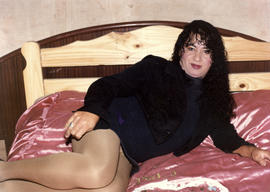
Laura Mikaela Gallardo

  • LG01
  • Persona
  • 1972 - presente

Laura Mikaela Gallardo nació el 28 de abril de 1972 en un pequeño pueblo de la provincia de Santa Fe. Durante su infancia y adolescencia inició un proceso de construcción de su identidad de género en un contexto social caracterizado por la falta de reconocimiento y derechos para las personas trans. A los 14 años comenzó su transición y, durante ese período, transitó distintas localidades, entre ellas la ciudad de Santa Fe, Catamarca y San Nicolás, en búsqueda de espacios donde pudiera desarrollar su vida de acuerdo con su identidad.
A los 16 años asumió el cuidado de Alejandro, un bebé que pasó a formar parte central de su trayectoria personal. Desde entonces sostuvo su crianza y acompañamiento, procurando garantizar su bienestar y educación en un contexto atravesado por dificultades económicas y sociales. Esta responsabilidad fue un eje significativo en sus decisiones personales y laborales.
Durante la década de 1990 se radicó en el conurbano bonaerense. En Berazategui contó con el acompañamiento de Marilyn, una amiga trans que la recibió y la acompañó en una nueva etapa de su vida. Como muchas mujeres trans de su generación, ante las restricciones para acceder al empleo formal recurrió al trabajo sexual como estrategia de subsistencia. En esos años atravesó situaciones de persecución policial, detenciones y violencia institucional, en un período marcado por la criminalización de las identidades trans.
En 1996 conoció a Raúl en el boliche Fénix, con quien inició una relación afectiva que continúa hasta la actualidad. Durante esos años mantuvo también un vínculo constante con Alejandro, a quien visitaba en Santa Fe y acompañaba en su desarrollo.
En octubre de 2000 decidió dejar el trabajo sexual y, junto a Raúl, se trasladó a Florencio Varela, donde inició una nueva etapa vinculada al trabajo independiente y la construcción de un proyecto de vida estable. Participó en redes comunitarias de intercambio, realizó diversas actividades laborales y desarrolló emprendimientos comerciales vinculados a la venta por catálogo, que posteriormente dieron lugar a un negocio propio de blanquería y lencería.
Laura también participó en espacios de organización social. Formó parte del Movimiento de Trabajadores Desocupados (MTD) Aníbal Verón y estuvo presente el 26 de junio de 2002 en el Puente Pueyrredón, durante la jornada en la que fueron asesinados Maximiliano Kosteki y Darío Santillán. Posteriormente completó sus estudios primarios y secundarios y continuó con procesos de formación.
En 2010 contrajo matrimonio con Raúl tras la sanción de la Ley de Matrimonio Igualitario. En 2012 accedió a la rectificación registral de su identidad a partir de la Ley de Identidad de Género. Desde 2014 trabaja como administrativa en la Subsecretaría de Derechos Humanos de la Municipalidad de Florencio Varela y participa en la Asociación de Travestis, Transexuales y Transgéneros de Argentina (ATTA), junto a referentes del movimiento trans como Marcela Romero y Claudia Pía Baudracco, desarrollando acciones vinculadas a la ampliación y defensa de derechos de las personas trans.

Laura Mikaela Gallardo was born on April 28, 1972, in a small town in the province of Santa Fe. During her childhood and adolescence, she began a process of constructing her gender identity in a social context characterized by the lack of recognition and rights for trans people. At the age of 14, she began her transition and, during this period, lived in different places, including the city of Santa Fe, Catamarca, and San Nicolás, in search of spaces where she could live her life in accordance with her identity.

At the age of 16, she took responsibility for the care of Alejandro, a baby who became a central part of her personal trajectory. From then on, she supported his upbringing and accompanied him throughout his development, seeking to ensure his well-being and education in a context marked by economic and social difficulties. This responsibility became a significant factor in her personal and professional decisions.

During the 1990s, she settled in Greater Buenos Aires. In Berazategui, she received support from Marilyn, a trans friend who welcomed her and accompanied her during a new stage of her life. Like many trans women of her generation, faced with restrictions on access to formal employment, she turned to sex work as a means of subsistence. During those years, she experienced police persecution, detentions, and institutional violence, in a period marked by the criminalization of trans identities.

In 1996, she met Raúl at the Fénix nightclub, with whom she began a romantic relationship that continues to this day. During those years, she also maintained a close relationship with Alejandro, whom she visited in Santa Fe and supported throughout his development.

In October 2000, she decided to leave sex work and, together with Raúl, moved to Florencio Varela, where she began a new stage focused on independent work and the construction of a stable life project. She participated in community exchange networks, carried out various types of work, and developed commercial ventures related to catalog sales, which later led to her own business selling household linens and lingerie.

Laura also participated in spaces for social organization. She was a member of the Movimiento de Trabajadores Desocupados (MTD) Aníbal Verón and was present at Puente Pueyrredón on June 26, 2002, during the day when Maximiliano Kosteki and Darío Santillán were killed. She subsequently completed her primary and secondary education and continued her training.

In 2010, she married Raúl following the enactment of the Equal Marriage Law. In 2012, she obtained the legal rectification of her identity under the Gender Identity Law. Since 2014, she has worked as an administrative employee in the Undersecretariat for Human Rights of the Municipality of Florencio Varela and has participated in the Asociación de Travestis, Transexuales y Transgéneros de Argentina (ATTA), alongside prominent figures of the trans movement such as Marcela Romero and Claudia Pía Baudracco, developing initiatives related to the expansion and defense of the rights of trans people.

Nury Osmar Luis Calcagno

  • NC01
  • Persona
  • 1939 - presente

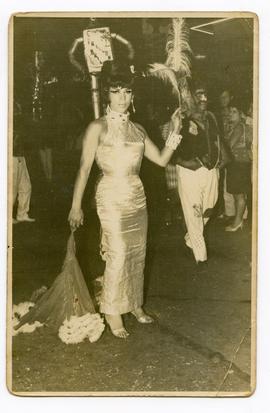
Nury, nombre por el que es conocida Osmar Luis Calcagno y por el que actualmente también es llamada Omi, nació en la ciudad de Santa Fe el 12 de mayo de 1939, aunque fue inscripta oficialmente el 25 de mayo del mismo año. Creció junto a sus padres y un hermano mayor. Realizó allí sus estudios primarios y cursó el primer año de la escuela secundaria, que interrumpió al incorporarse tempranamente al mundo laboral.

Desde la infancia manifestó interés por el teatro, el baile, el maquillaje, la vestimenta y la interpretación de personajes femeninos. Durante la adolescencia comenzó a vincularse con espacios artísticos y grupos de amistades con intereses compartidos, desarrollando una afinidad por el espectáculo y la música. En Santa Fe asistió a presentaciones de distintas figuras del teatro y de la canción popular, experiencias que acompañaron su acercamiento al mundo artístico.

El nombre artístico Nury surgió a partir de una invitación para participar en un espectáculo de varieté. Posteriormente comenzó a presentarse como transformista en el cabaret Julien de Santa Fe, donde cantaba y participaba en distintos números escénicos. Durante aproximadamente cinco o seis años combinó esta actividad con trabajos en una mueblería, una zapatería y otros comercios.

A los 17 años se trasladó a Buenos Aires en un tren de carga. Durante sus primeros años en la ciudad trabajó como mucamo y en una confitería del barrio de Chacarita. En ese período atravesó la persecución policial hacia las expresiones de género disidentes y fue detenida en reiteradas oportunidades mediante la aplicación de edictos policiales, entre ellos el denominado “2.º H”. Estas prácticas de control y criminalización continuaron durante su juventud y, con menor frecuencia, durante la última dictadura cívico-militar.

A los 25 años conoció a Hugo, oriundo de Córdoba, con quien construyó una relación de pareja de 48 años. Juntos residieron en Hurlingham y posteriormente en Berazategui, donde compartieron una vida familiar y afectiva. Con el tiempo, su madre aceptó la relación y estableció un vínculo cercano con ambos.

Los carnavales ocuparon un lugar central en su trayectoria artística y comunitaria. Desde los 20 años participó en comparsas de Tigre, Avellaneda y Berazategui, entre ellas Los Vacantes y Los Elegantes. Diseñaba y confeccionaba sus propios trajes con la colaboración de personas vinculadas al teatro. También desarrolló actividades relacionadas con el canto, el dibujo y la pintura, e integró un coro de la Coordinadora de Berazategui.

En los últimos años se acercó al Archivo de la Memoria Trans, donde aportó fotografías y documentos personales para la preservación de la memoria colectiva travesti y trans. Actualmente continúa compartiendo su trayectoria y sus archivos personales como parte de la construcción de memorias comunitarias y del reconocimiento de las experiencias de las generaciones que la precedieron.

Nury, the name by which Osmar Luis Calcagno is known and which she is also currently called Omi, was born in the city of Santa Fe on May 12, 1939, although she was officially registered on May 25 of the same year. She grew up there with her parents and an older brother. She completed her primary education and attended the first year of secondary school, which she left when she entered the workforce at an early age.

From childhood, she was drawn to theater, dancing, makeup, clothing, and performing female characters. During her adolescence, she began becoming involved in artistic spaces and social groups with shared interests, while developing a strong affinity for entertainment and music. In Santa Fe, she attended performances by various figures from theater and popular music, experiences that accompanied her growing involvement in the arts.

The stage name Nury emerged from an invitation to participate in a variety show. She later began performing as a transformista at the Julien cabaret in Santa Fe, where she sang and took part in stage performances. For approximately five or six years, she combined this activity with various commercial jobs, including work at a furniture store, a shoe store, and other businesses.

At the age of 17, she moved to Buenos Aires by freight train. During her first years in the city, she worked as a domestic servant and at a confectionery in the Chacarita neighborhood. During this period, she experienced police persecution directed at gender-nonconforming expressions and was arrested repeatedly under the enforcement of police edicts, including the one known as “2.º H.” These practices of surveillance and criminalization continued throughout her youth and, less frequently, during Argentina’s last civic-military dictatorship.

At the age of 25, she met Hugo, who was from Córdoba, and they built a 48-year relationship. They lived together in Hurlingham and later in Berazategui, where they shared a family and affective life. Over time, her mother accepted their relationship and developed a close bond with both of them.

Carnival became a central space in her artistic and community life. From the age of 20, she participated in comparsas in Tigre, Avellaneda, and Berazategui, including Los Vacantes and Los Elegantes. She designed and made her own costumes with the assistance of people connected to the theater. She also pursued activities related to singing, drawing, and painting, and was a member of a choir organized by the Coordinadora de Berazategui.

In recent years, she became involved with the Archivo de la Memoria Trans, where she contributed photographs and personal documents to the preservation of collective travesti and trans memory. She currently continues to share her life story and personal archives as part of the construction of community memory and the recognition of the experiences of the generations that came before her.

Susana Montenegro

  • SM02
  • Persona
  • 1961 - Presente

Susana Montenegro nació el 21 de agosto de 1961 y creció en el sur del Gran Buenos Aires, desarrollando su trayectoria de vida entre Quilmes, Berazategui, Bosques y la Ciudad de Buenos Aires. Desde su juventud atravesó distintos procesos vinculados con la construcción de su autonomía, su identidad y la búsqueda de espacios de pertenencia. Durante la adolescencia realizó diversos trabajos, entre ellos en una pizzería y rotisería, donde desempeñó distintas tareas. También se formó en corte y confección, incorporando estos conocimientos como saber laboral que continuó desarrollando a lo largo de los años.

A lo largo de su vida construyó vínculos afectivos significativos, entre ellos su relación con Abel Antúnez. Posteriormente atravesó períodos que requirieron tratamientos prolongados en instituciones de salud como el Hospital San Juan de Dios de La Plata, el Hospital Evita Pueblo de Berazategui y el Hospital Muñiz de la Ciudad de Buenos Aires. Durante esas etapas contó con redes de acompañamiento conformadas por amistades, personas cercanas y referentes comunitarios.

Entre 2006 y 2007 ingresó a un hogar de tránsito ubicado en la zona de Mompox y Solís, próximo a Plaza Garay, donde permaneció aproximadamente dos años. Durante ese período recuperó documentación personal, realizó gestiones para acceder a una pensión, retomó su formación en corte y confección y participó de las tareas organizativas del espacio. Allí también estableció vínculos con integrantes de comunidades religiosas, entre ellos Osvaldo y Lisandro, quienes formaron parte de sus redes de acompañamiento.

Durante su permanencia en el hogar conoció a Juan Carlos, con quien mantuvo una relación de diecisiete años. Junto a él acompañó la crianza de Alexis, hijo de su pareja, participando de su crecimiento y escolaridad. Tras la separación continuó su vida de manera independiente, sosteniendo sus vínculos afectivos y comunitarios. Retomó además actividades laborales vinculadas principalmente con tareas de limpieza en hogares particulares y otros espacios de trabajo.

Su recorrido también estuvo relacionado con grupos de acompañamiento vinculados al Hospital Muñiz, donde compartió experiencias y espacios comunitarios con personas travestis y trans provenientes de distintas provincias, entre ellas Corrientes, Mendoza y Buenos Aires. En esos ámbitos coincidió con activistas y referentes del movimiento trans argentino, como Alex Freire, Dante y Claudia Pía Baudracco, a quien conocía desde su juventud.

Actualmente reside en Berazategui y participa de actividades vinculadas al Archivo de la Memoria Trans, donde encuentra un espacio de encuentro, memoria y construcción colectiva. Continúa vinculada a la costura, las comparsas de carnaval y la fotografía como forma de registro de experiencias, así como a la preservación de los lazos afectivos y comunitarios construidos a lo largo de su trayectoria.

Susana Montenegro was born on August 21, 1961, and grew up in the southern Greater Buenos Aires area, living at different times in Quilmes, Berazategui, Bosques, and the City of Buenos Aires. From a young age, she experienced different processes related to building her independence, developing her identity, and seeking spaces where she could find a sense of belonging. During her adolescence, she held various jobs, including working at a pizzeria and rotisserie, where she performed a range of tasks. She also trained in dressmaking and tailoring, developing these skills as part of her working life and continuing to practice them over the years.

Throughout her life, Susana formed significant emotional relationships, including her relationship with Abel Antúnez, who played an important role in her personal journey. She later went through periods that required prolonged medical treatment at institutions including Hospital San Juan de Dios in La Plata, Hospital Evita Pueblo in Berazategui, and Hospital Muñiz in the City of Buenos Aires. During these periods, she relied on support networks made up of friends, people close to her, and community figures.

Between 2006 and 2007, she entered a transitional housing facility located near the intersection of Mompox and Solís streets, close to Plaza Garay, where she remained for approximately two years. During this period, she recovered her personal documentation, began the necessary procedures to obtain a pension, resumed her training in dressmaking and tailoring, and took part in the organizational tasks of the residence. There she also developed relationships with members of religious communities, including Osvaldo and Lisandro, who became part of her support network.

While living at the residence, Susana met Juan Carlos, with whom she maintained a seventeen-year relationship. Together, they supported the upbringing of Alexis, Juan Carlos's son, taking part in his growth and schooling. After their separation, Susana continued her life independently while maintaining her emotional and community ties. She also returned to working primarily in cleaning jobs in private homes and other workplaces.

Her life trajectory was also connected to support groups associated with Hospital Muñiz, where she shared experiences and community spaces with travestis and trans people from different provinces, including Corrientes, Mendoza, and Buenos Aires. In these settings, she crossed paths with activists and figures from Argentina's trans movement, including Alex Freire, Dante, and Claudia Pía Baudracco, whom she had known since her youth.

Susana currently lives in Berazategui and participates in activities connected to the Archivo de la Memoria Trans, where she finds a space for gathering, memory, and collective work. She remains connected to her interests in sewing, carnival comparsas, and photography as a means of documenting experiences, as well as to preserving the emotional and community ties she has built throughout her life.